Broad Shoulders? 7 Wedding Dress Rules That Actually Work
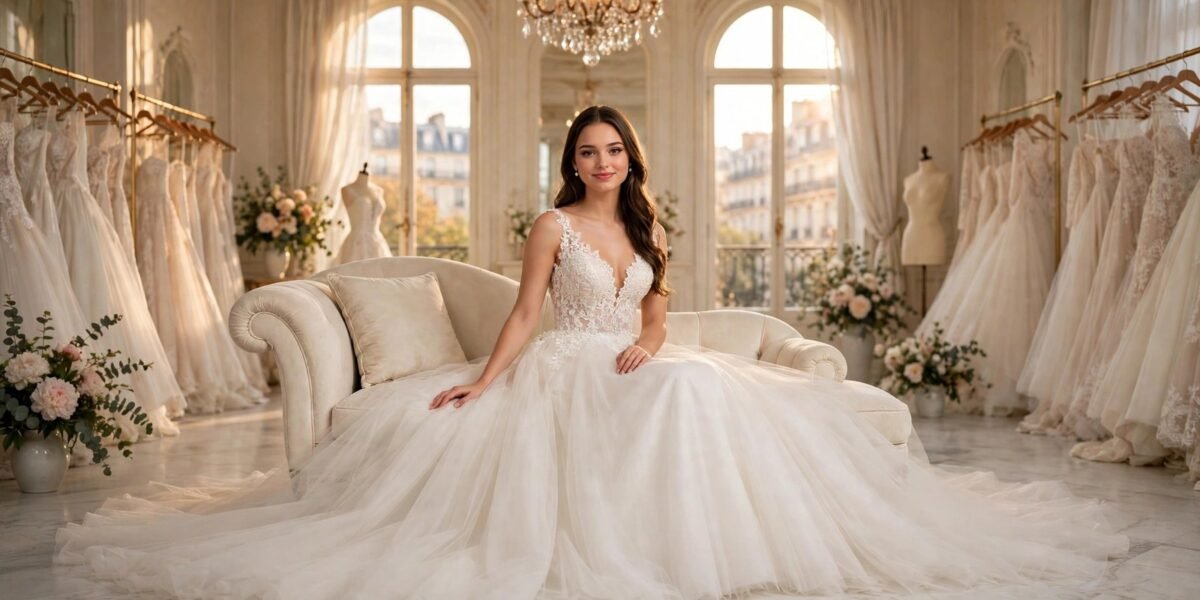
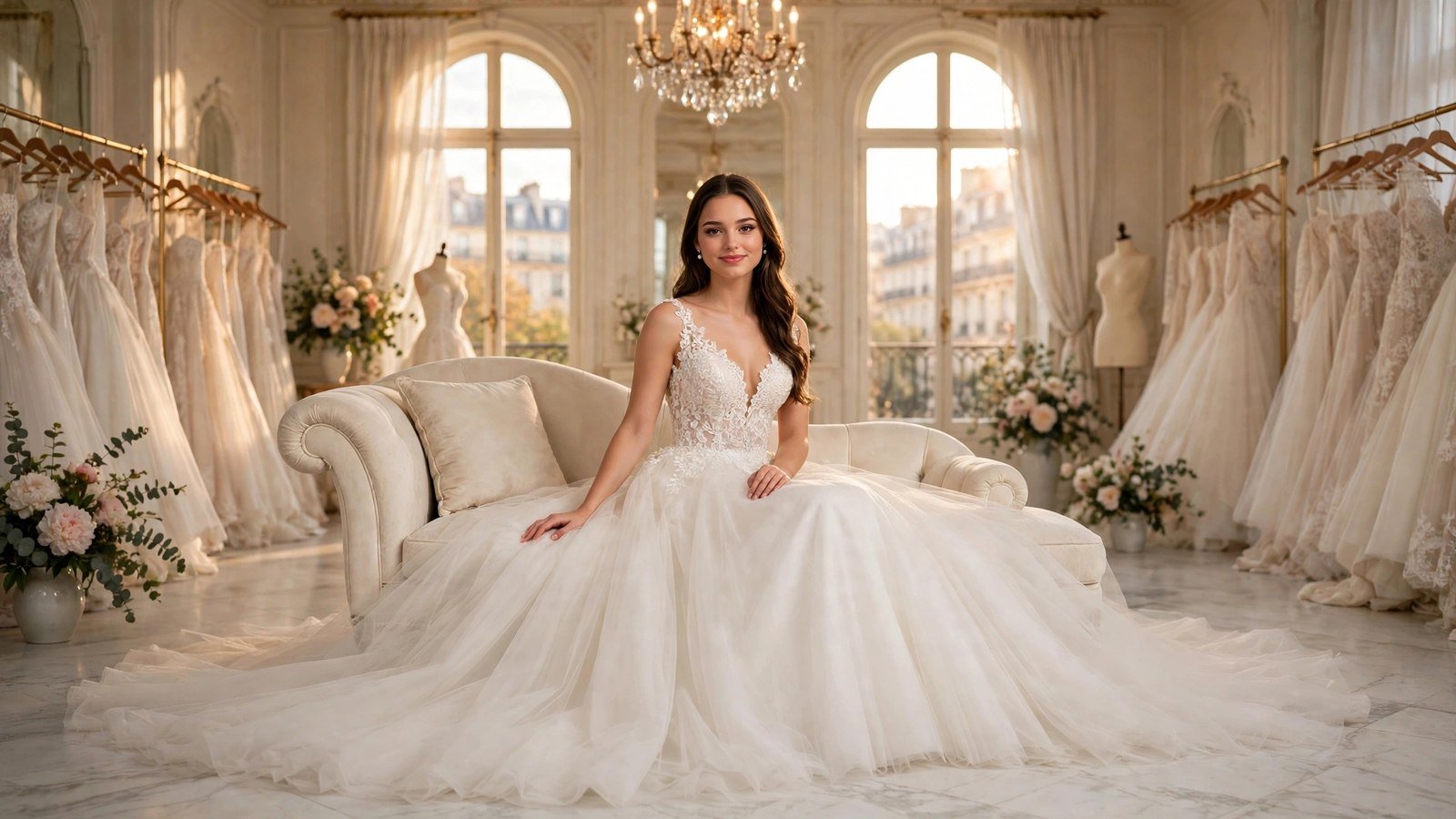
If you have broad shoulders, dress shopping can feel like every gown was designed for someone else. Strapless styles slide into armpit territory, delicate straps disappear, and somehow the mirror keeps showing you a linebacker in lace. Here’s the good news: broad shoulders are not a problem to hide — they’re a proportion to balance. Stylists who dress athletic and broad-shouldered brides follow the same handful of rules. Learn them before your fitting and the whole appointment changes. Our model Clara Belle tried on the three silhouettes stylists reach for first, so you can see every rule on a real frame.
Rule 1: Draw a Vertical Line
The eye follows lines. A deep V, a plunging neckline or a narrow scoop creates one strong vertical line down the center of your body, and your shoulders instantly read narrower. This is why V-necks are the first thing most stylists pull for broad-shouldered brides.
Rule 2: Balance the Top With Volume Below
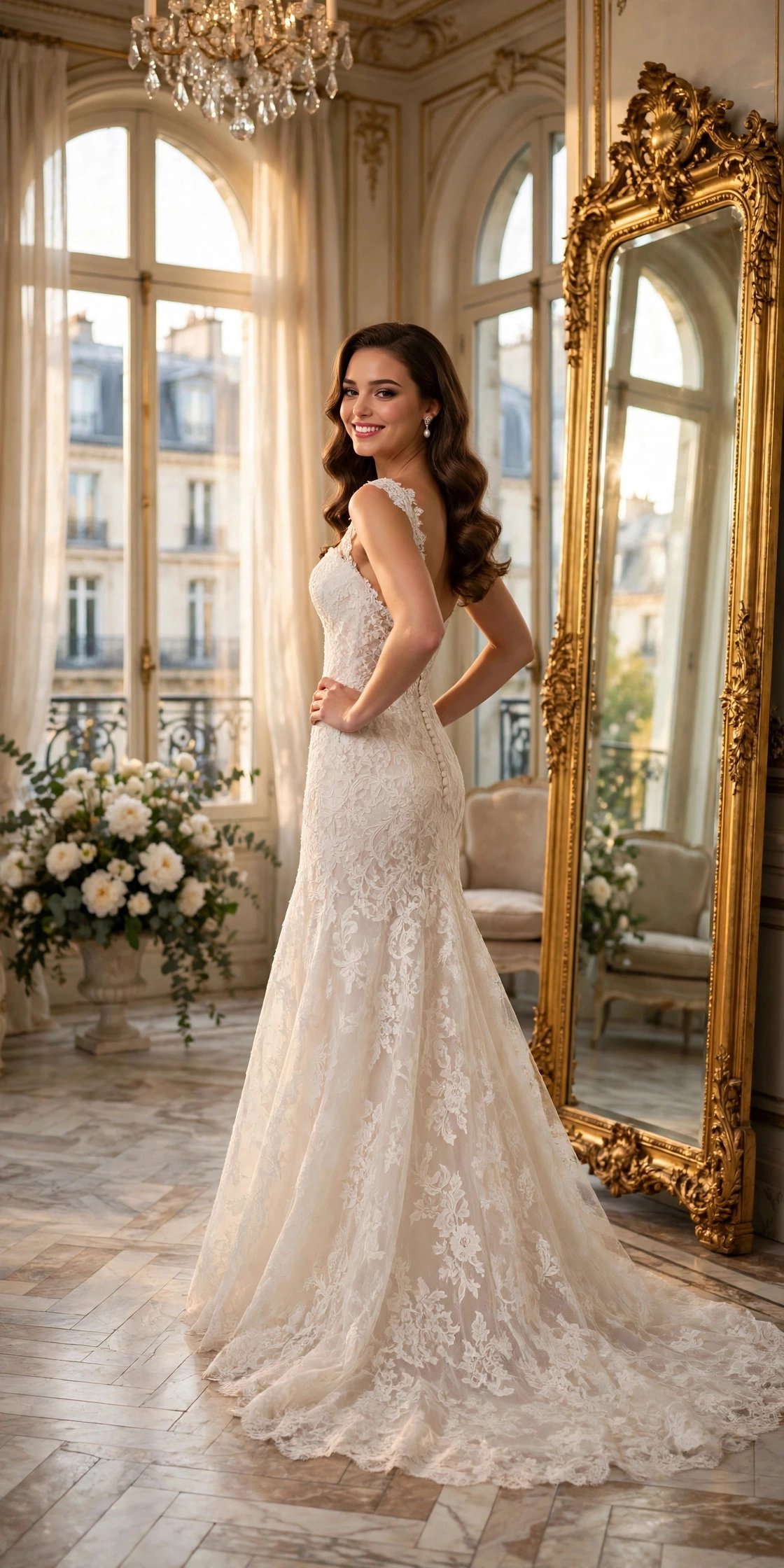
Proportion is a seesaw. If your top half carries visual weight, add some to the bottom: A-line skirts, fit-and-flare shapes and ballgown-lite skirts all widen the silhouette below the waist, and the shoulders settle into balance. A slim, straight column dress does the opposite — it leaves your shoulders as the widest point in the picture.

Rule 3: Soften the Shoulder Line
You don’t need to cover your shoulders; you need to break up the horizontal line they create. Lace straps, illusion sleeves and diagonal draping or ruching across the bodice all interrupt that line. Cap sleeves can work too — they add a soft edge rather than a hard stop.
Rule 4: Skip the True Horizontals
Boat necks and bateau necklines run straight from shoulder to shoulder — beautiful on narrow frames, widening on yours. Off-the-shoulder styles do the same thing one inch lower. And be careful with halters: they frame the shoulders like a trophy. If you love the look, try it — but try it next to a V-neck and compare photos, not mirrors.
Rule 5: Mind the Straps
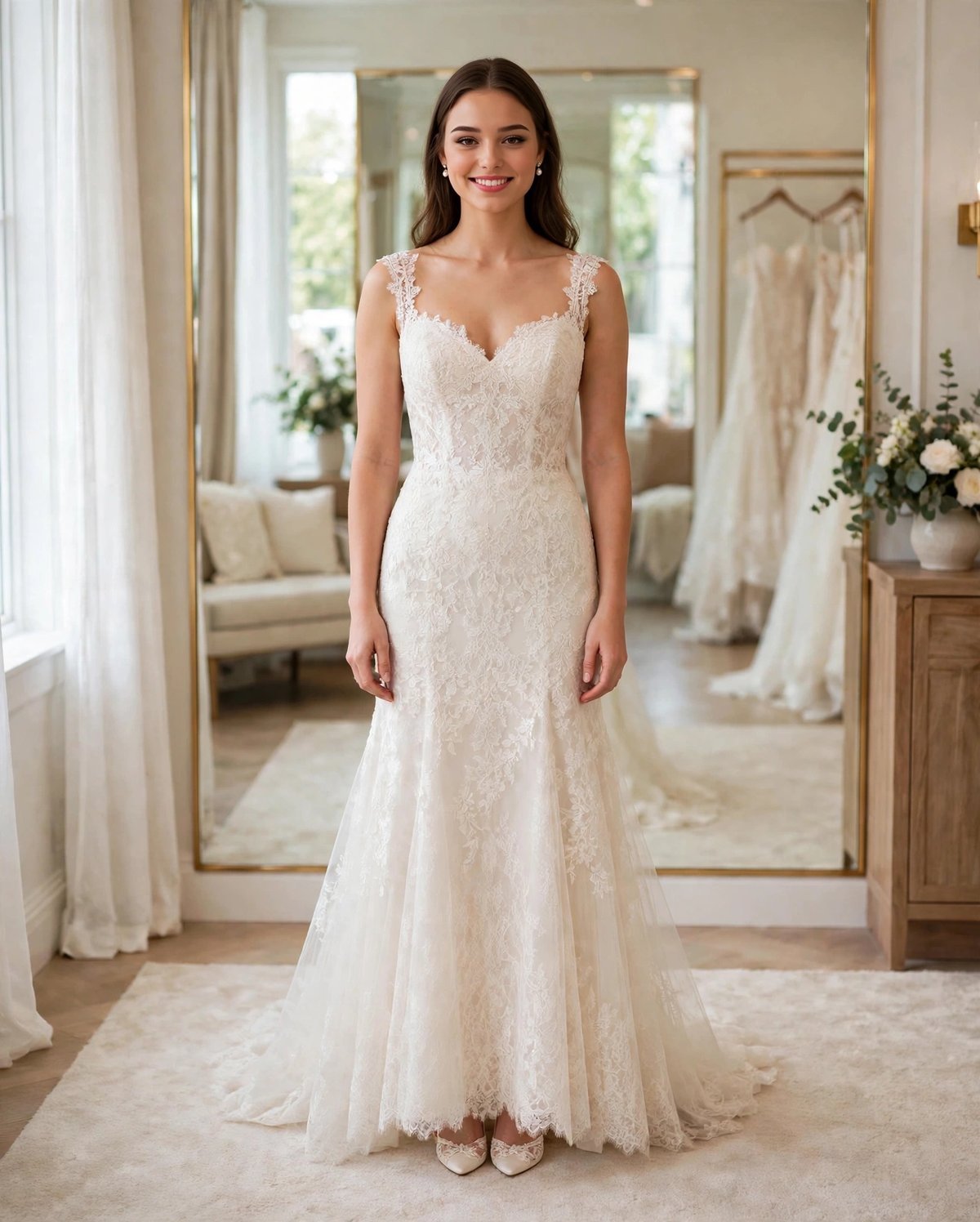
Spaghetti straps get visually lost on a strong shoulder and can make proportions look off. A slightly wider strap, a lace strap, or a well-cut sleeveless bodice with a V front looks intentional instead of fragile. If you’re going strapless, choose a sweetheart or a subtle dip over a straight-across cut.
Rule 6: Use Your Waist
Broad shoulders plus a defined waist equals an hourglass read. Belts, sashes and seamed bodices that mark the waist give the eye a second focal point, and the whole silhouette turns statuesque instead of top-heavy.
Rule 7: Test With Photos, Not the Mirror
Mirrors flatter and lie at the same time. Have your stylist or a friend take straight-on photos of your top three dresses, then compare them side by side an hour later. The balanced dress wins every photo test — it’s the same reason our readers vote on try-on photos: the camera shows proportion the way everyone else will see it.
The Quick Fitting-Day Checklist
- First rack pull: deep-V A-line, sweetheart fit-and-flare with straps, one wildcard.
- Compare every dress against a V-neck baseline.
- Photograph the top three; decide from the photos.
- If a dress needs you to stand a certain way to “work,” it doesn’t work.
Broad shoulders carry a gown with presence most brides have to fake. Balance the proportions, and that presence becomes the whole point.
Shopping the Elie Saab × H&M drop when it lands October 29? Start with our guide on how to buy the Elie Saab × H&M wedding dress. And for more gowns, guides and try-on collections, browse the full Wedding Dress section.
Related Stories
 Say Yes to the Dress
Essential Guide: 17 Mother-of-the-Bride Duties Every Mom Should Know
 Say Yes to the Dress
Decoding Decisions: A Guide for Indecisive Brides on Choosing the Perfect Wedding Dress
 Wedding Dress